

BoardTempo workshops · 4/8
One pottery studio, six reader jobs: build a practical Pinterest board map
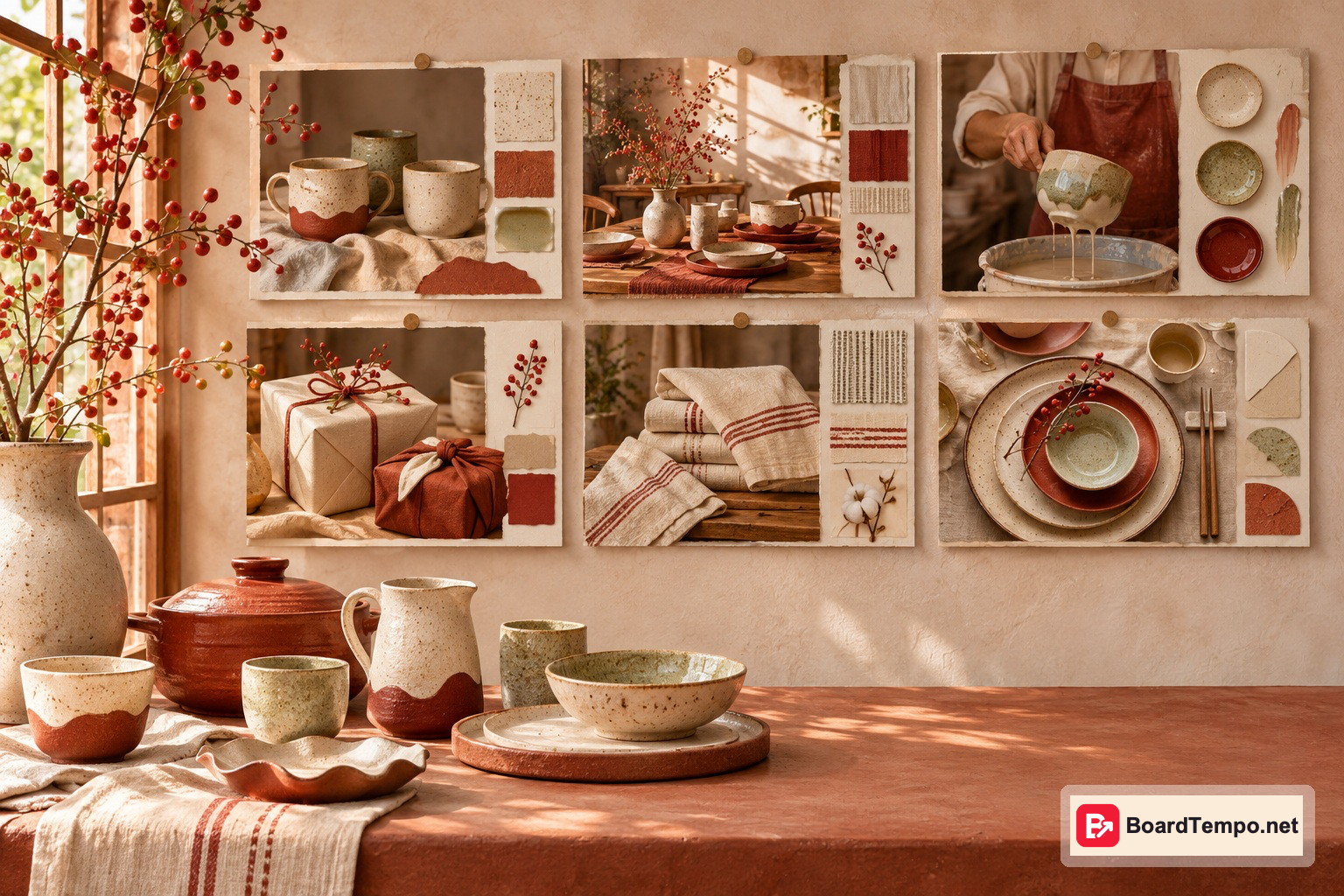
A mug can be a gift, part of a table setting, an everyday tool or a surface for an interesting glaze. The object stays the same; the reader's question changes. That gives a pottery studio a more useful way to plan boards than sorting everything into “beautiful things.”
Our fictional studio makes mugs, small vases and gift sets, and publishes care information. The six boards below are an example, not a recommended minimum. If you cannot support a topic with useful material yet, leave it on the planning sheet. An empty shop window does not become useful because the sign is excellent.
1. Choose a mug for everyday use
Working board name: “Ceramic Mugs: Shape and Size.” Include comparisons of capacity, handle details, photographs in a hand and explanations of different forms.
A pin such as “Wide cup or tall mug: which shape suits your routine?” belongs here if the destination genuinely compares them. A breakfast photograph in which a mug happens to appear may not. The board's job is to help someone choose an object, not simply make them hungry.
An example description: “Compare ceramic mug shapes, sizes and details, with views in the hand and on the table.” Use actual measurements and confirmed properties for real products.
2. Find a small, thoughtful gift
Working name: “Ceramic Gifts for the Home.” Show sets, packaging and gifting situations. A useful destination explains what is included rather than relying entirely on a ribbon and attractive lighting.
“Inside a coffee-lover's gift set” should lead to that set or a clearly labelled comparison of options. Delivery claims must match actual destinations and conditions. A nice gifting idea is not a promise that every order will arrive before every celebration.
This board differs from the first because the reader is choosing a gift experience, not merely a cup shape with the word “buy” added.
3. Put together an inviting table
Working name: “Table Settings with Handmade Pottery.” The central idea is the relationship between dishes, linen and food. Try a terracotta plate, warm white fabric and a restrained pistachio accent.
A pin titled “A warm table setting without a twenty-piece matching set” needs a destination that explains the combination and shows the result. A product page containing one plate does not fully deliver that promise; create a separate product pin for that purpose.
A palette can give the board a recognisable mood, but it should not define the entire topic. Another colour scheme can still serve the same table-setting task.
4. Match a vase to a small arrangement
Working name: “Vases for Small Flower Arrangements.” Compare openings, heights, stability and the way stems sit inside. Show the vase in use rather than only as an empty object on a shelf.
“One branch or a fuller bunch: choosing a vase shape” should lead to an actual comparison. If the studio makes only one model, explain what suits that model rather than implying a range that does not exist.
This is different from a general table-setting board. The reader is solving a flower-container problem, even when a plate appears in the background.
5. Look after something already purchased
Working name: “Pottery Care from the Studio.” Use instructions for the studio's actual pieces: cleaning, storage and limitations of particular finishes.
Avoid blanket claims that all ceramics are dishwasher-safe. Materials, glazes and manufacturer guidance differ. Ask the maker when a property is unconfirmed instead of letting the content writer guess.
“How to care for mugs from this collection” can lead directly to that collection's instructions. It is a useful relationship after the purchase, not necessarily an attempt to sell another mug immediately.
6. See how a piece comes into being
Working name: “Inside Our Pottery Process.” Show stages, tool marks, painting decisions or preparation for a batch. Use the studio's own process or clearly labelled educational illustrations.
“From sketch to cup: three decoration decisions” can lead to a process story. Do not label it a complete tutorial if it does not provide enough instruction to repeat the work. Watching a maker and learning the craft are different promises.
Decide where an ambiguous pin belongs
| Image | Main promise | Board |
|---|---|---|
| Mug in a gift box | Contents and presentation | Gifts |
| Same mug beside a hand | Size and handling | Shape and Size |
| Mug on a laid table | Combining objects | Table Settings |
| Close-up of glaze | Care for that finish | Pottery Care |
Choose the board from the pin's main promise and destination, not every object that happens to appear in its image. A mug in the frame is not a reason to put the same material everywhere.
Sources
Let’s talk about it
What could help your project? Share your experience or ask a question.
The discussion will appear here after this article is posted in our Telegram channel and comments are enabled. You can visit the channel meanwhile. Comments are public; you are not automatically subscribed.
Telegram loads only when you click. Telegram may ask you to log in to comment. If the discussion is not available, use the channel link above.