

BoardTempo workshops · 2/8
Seven pin headline rewrites that give readers a reason to care
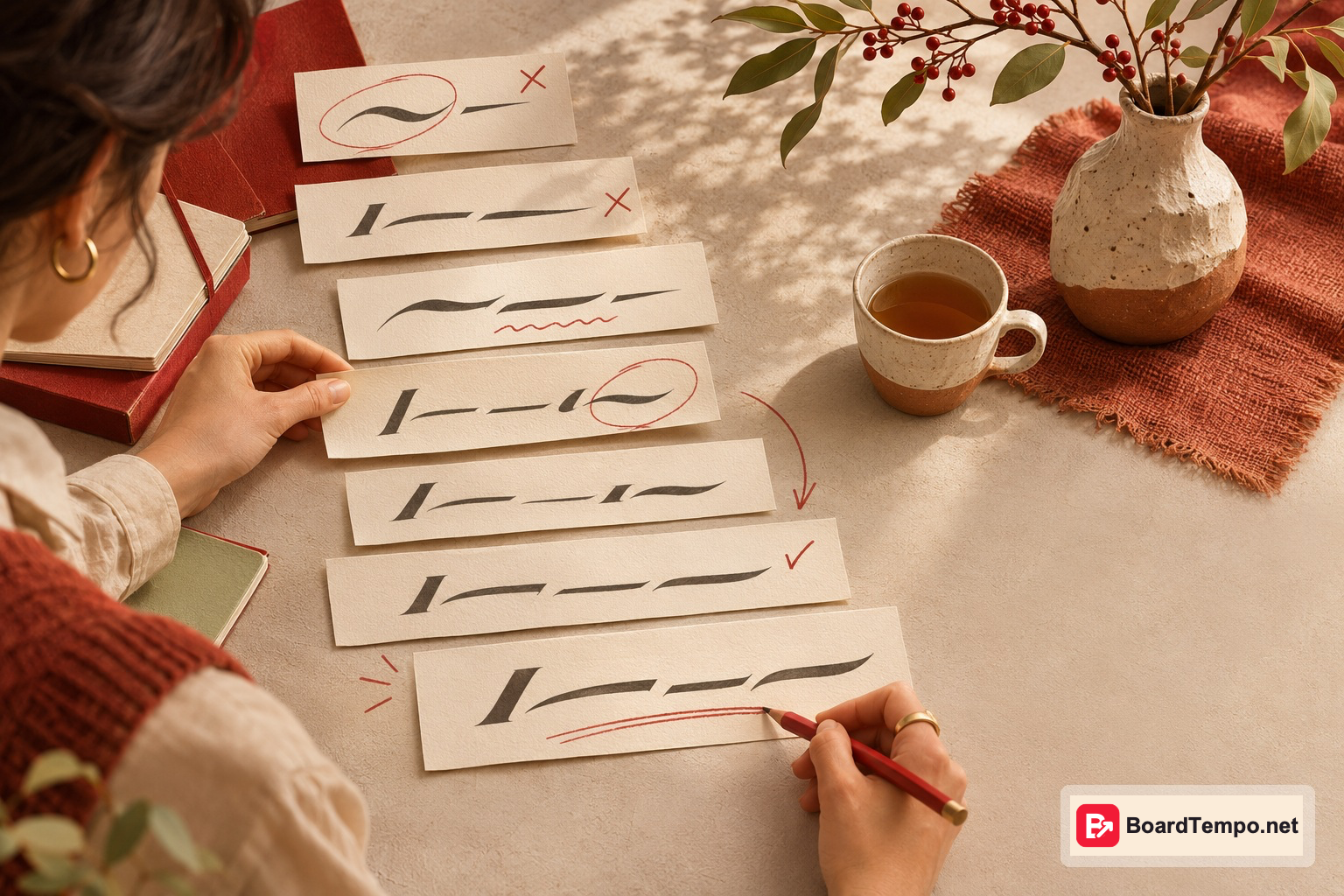
“Beautiful details” could describe a necklace, a bathroom or breakfast. It sounds pleasant, but it gives the reader very little help deciding whether your pin is relevant. Let's make the promise clearer without turning every headline into a shout.
The seven examples below are invented editorial exercises, not A/B-test winners. We are checking whether the subject, promise and destination agree. We are not claiming that a particular rewrite increases clicks. A headline only works honestly when the linked material delivers it.
1. Pottery: offer a decision, not admiration
Before: “Your dream coffee mug.”
After: “Tall mug or wide cup? Choose a shape for your coffee routine.”
Now the reader has a decision to make. Show both shapes and compare capacity, handle comfort and everyday use. If your destination only sells one tall mug, prepare the comparison before using this headline.
For that product page, “Tall ceramic mug with a generous handle” may be the better choice. Less suspense, more clarity. Not every pin needs to behave like a mystery novel.
2. Interiors: replace magic with a visible constraint
Before: “The perfect living room, effortlessly.”
After: “Two sofa layouts that keep the balcony door accessible.”
Show two arrangements of the same example room, with the door clearly marked. Explain the assumptions and label the plans as illustrative, not a universal solution for every home.
“Effortlessly” disappeared for a reason. Moving a sofa takes measurements and sometimes a willing friend. Both deserve a little respect. Useful detail is a stronger starting point than an unrealistic promise.
3. Flowers: add the occasion or setting
Before: “The most stylish bouquet.”
After: “Flowers for a narrow dining table: three arrangement shapes.”
The destination can explain proportions and show each arrangement beside place settings. This helps someone with an actual table rather than an abstract wish to be stylish. Do not promise how long flowers will last without the relevant conditions.
The pin image can feature one arrangement if the title clearly says the destination contains the full comparison. It does not need to squeeze an entire tutorial into one frame.
4. Teaching: name the exercise, not a new identity
Before: “Become an artist in one week.”
After: “Your first watercolour still life: a three-colour exercise.”
The lesson should contain materials, a sequence and the promised exercise. If the destination is a sales page for a course, describe it as such rather than presenting it as a complete free class.
Learning speed varies. A defined exercise is something you can deliver; a professional identity by Sunday is not. This distinction makes the offer clearer without removing its appeal.
5. Digital products: say what the customer receives
Before: “An organised pantry in five minutes.”
After: “Printable pantry labels: what's included and how to choose a size.”
A photograph may show finished jars, but the product is a file. Make that distinction visible. The destination should explain formats, dimensions and printing requirements so nobody expects a parcel of storage containers.
The title is more specific, but it does not all need to appear as tiny text on the image. Use a concise visual headline and a fuller pin title where appropriate. Clarity is not the same as filling every available pixel.
6. Photography: make the preparation useful
Before: “Photos that sell.”
After: “Five photos to prepare for your pottery shop's product page.”
An article might cover the complete object, a detail, scale, use and packaging. That is our example editorial checklist, not a compulsory platform standard.
Do not promise sales from a photograph alone. Images help people understand a product, but price, delivery and trust still matter. The more precise headline gives the photographer a credible way to demonstrate expertise without pretending to control the whole purchase.
7. Pinterest services: replace a giant outcome with a useful check
Before: “Thousands of customers from Pinterest.”
After: “People save your pin but don't visit your site: checks for the promise and link.”
The article should explain that saves and outbound clicks represent different actions, then guide a review of the actual content. A single metric does not establish why sales are weak. Offer diagnostic questions, not a confident verdict on an account you have never examined.
Write your own eighth example
Underline the subject, the reader's situation and the useful action. Remove language that could advertise almost any business. Check that the promised examples actually exist and that the image supports the same idea.
Then ask someone unfamiliar with the project what they expect after clicking. Do not simply ask whether they like the headline. If their expectation differs from the destination, revise the connection. This is an editorial clarity check, not keyword-demand research.
Sources
Let’s talk about it
What could help your project? Share your experience or ask a question.
The discussion will appear here after this article is posted in our Telegram channel and comments are enabled. You can visit the channel meanwhile. Comments are public; you are not automatically subscribed.
Telegram loads only when you click. Telegram may ask you to log in to comment. If the discussion is not available, use the channel link above.