

A Pinterest plan you can actually finish this month
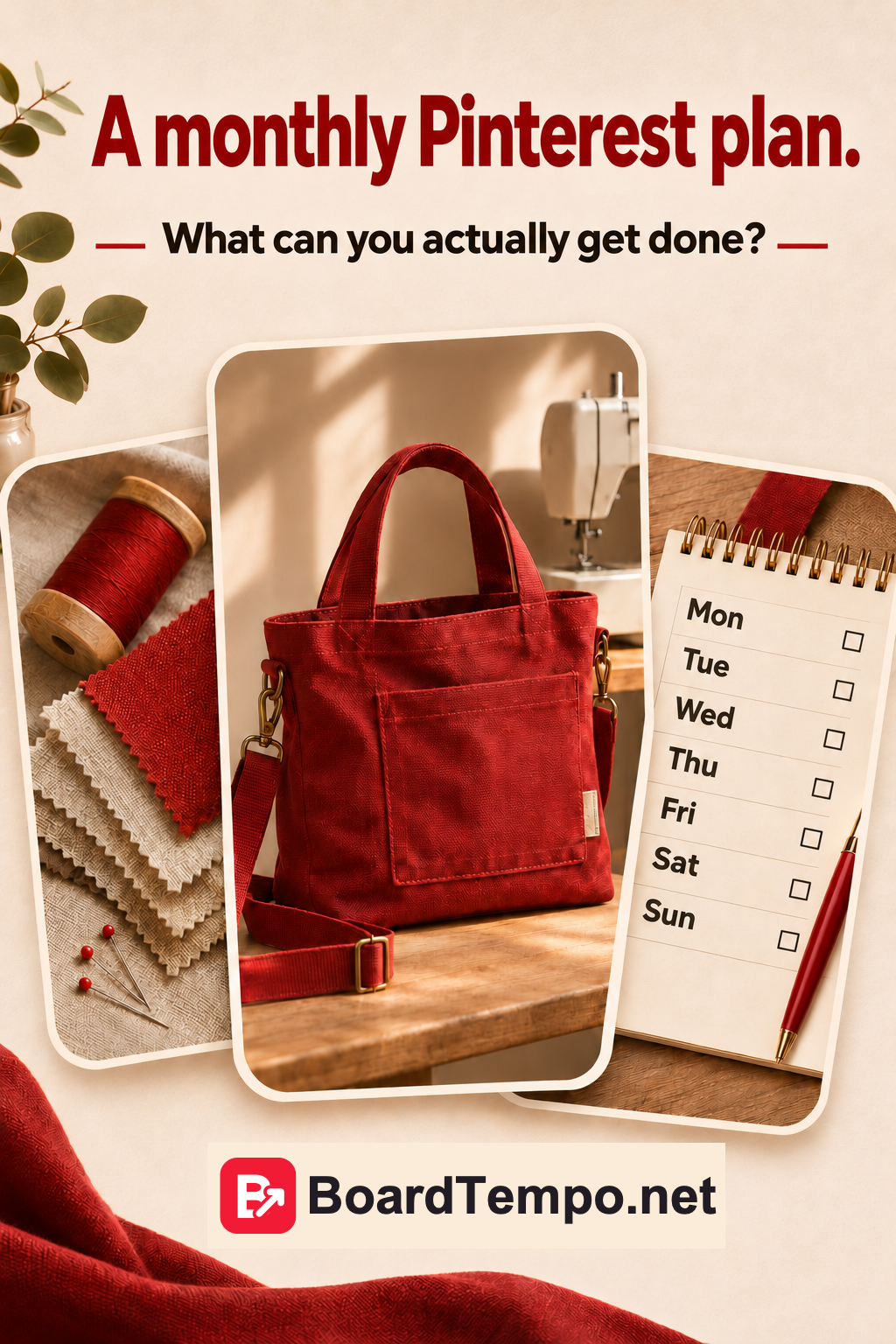
On Sunday, you decide to get serious about Pinterest. By Wednesday, the plan needs new photos, copy, website pages and an extra free evening. An ambitious schedule. Now to find someone who can do it all.
Let's make a more workable version for a small studio, where making products, packing orders and marketing often fall to the same pair of hands.
Give the month a clear job
Imagine a studio with three bag designs, good photos and one model ready to order. Start there. Not because the others are less interesting, but because one clear job is easier to complete than a little bit of everything.
The brief might be: “Show our shopping tote to buyers looking for a reusable bag. The link will explain its size, pockets, colours and ordering details.”
Use an offer you can already sell, explain or demonstrate. A product that exists only in your head is difficult to photograph.
Week one: see what you already have
Open your photo folders, product page and recent customer questions. You may not need thirty new shots. Perhaps you only need two: the bag on a shoulder and a view of what fits inside.
List the gaps. Measure the straps, photograph the inside pocket, add delivery details. Give each job an owner and a date. If every name is yours, allow only as much work as a normal week can hold.
Finishing one product page is more useful at this stage than choosing a font for twenty future Pins.
Week two: prepare a small batch
For this example, try three different angles: what fits inside, how the tote sits over a coat, and what the separate pocket is for. Three is a manageable batch, not a Pinterest rule.
Each angle needs the right evidence. Items laid beside the bag help explain capacity. A shoulder shot explains the straps better than a close-up of an attractive seam.
Then write the titles and descriptions. If the photo does not answer the question, change the photo. Copy should not have to do all the heavy lifting.
Week three: publish, with room to respond
Choose days when you can publish and check the destination link. Put them in your calendar. Pinterest encourages regularly creating original content; this schedule is a way to organise that work, not a universal posting frequency.
Leave some space. A customer may ask about fabric or delivery just as a colour sells out. Replies and updates are part of the work too.
Week four: decide what comes next
Look at the questions you received and which publications brought website visits. We cover the numbers in “Are your Pins working?” Here, the useful outcome is a decision: what to continue, what is missing and what to set aside.
If several buyers asked whether the straps fit over a winter coat, that photo belongs in the next plan. It is more useful than copying last month's calendar unchanged.
If there is little response, check what actually went out, whether the links worked and whether the pages answered buyers' questions before rewriting the whole profile. A month is a convenient planning period, not a deadline by which Pinterest owes you orders.
Your plan in five lines
What are we promoting this month?
What is ready?
What needs to be photographed or written?
When will we prepare and publish it?
When will we review the results and choose the next topic?
Fill these in before designing the cards. Each publication will have a purpose, and the plan will no longer depend on you somehow finding an extra working week.
Read next
Source
Let’s talk about it
What could help your project? Share your experience or ask a question.
The discussion will appear here after this article is posted in our Telegram channel and comments are enabled. You can visit the channel meanwhile. Comments are public; you are not automatically subscribed.
Telegram loads only when you click. Telegram may ask you to log in to comment. If the discussion is not available, use the channel link above.