

Affiliate links on Pinterest: recommend something useful without losing trust
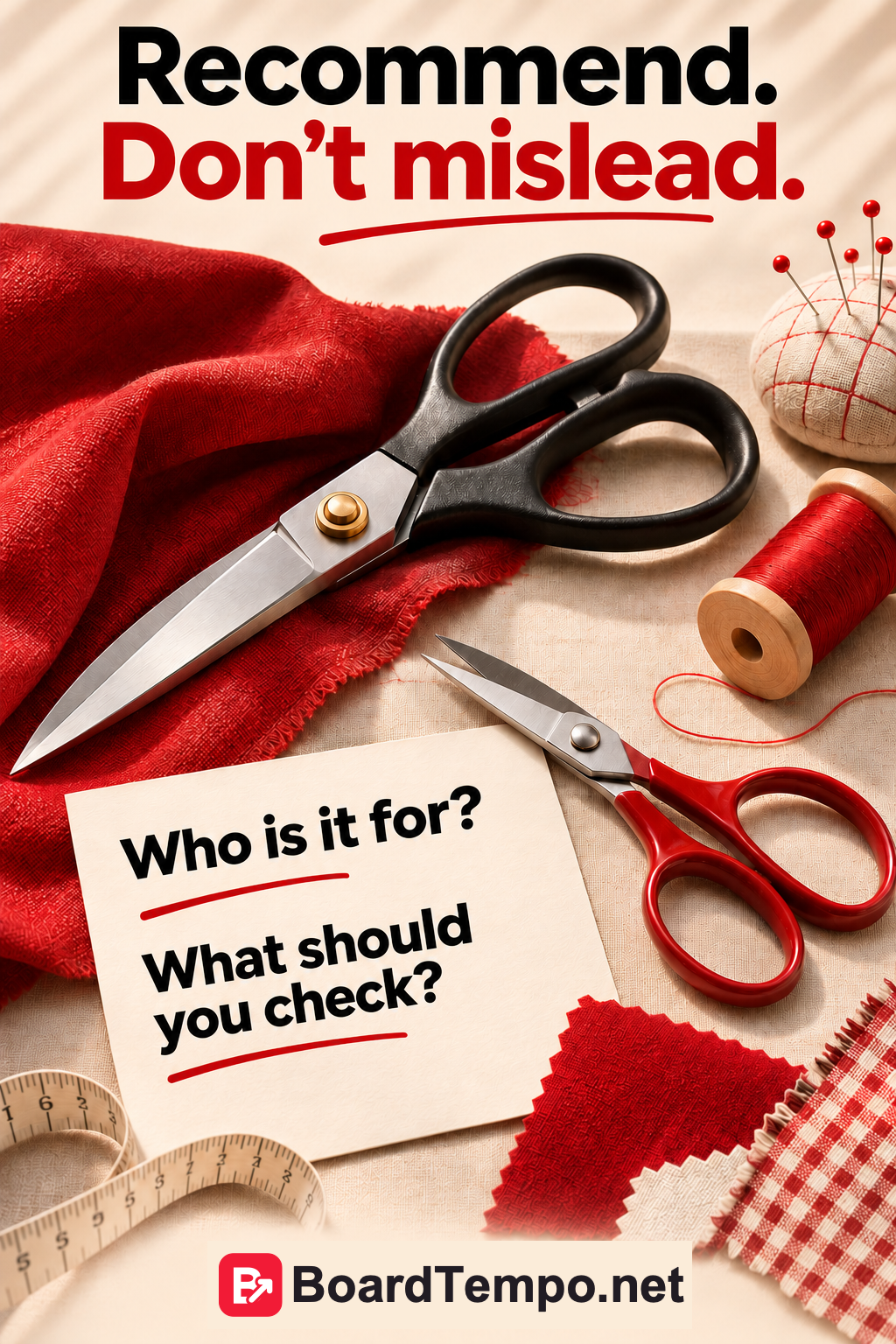
Someone asks which scissors are good for cutting fabric. You could explain the differences, show the handles and blades, and suggest what to try before buying. Or you could quietly send a link to the most expensive pair.
Both answers contain a link. Only one does much to help. Start affiliate recommendations with that usefulness, not the commission rate.
What are you paid for?
An affiliate link helps a programme connect a purchase, or another qualifying action, to your recommendation. If the programme's conditions are met, you may receive a commission.
This is not Pinterest paying you for image views. The programme sets who pays, for what and when. A click is not a purchase, and a provisional commission is not money received.
Recommend something you can explain
For a guide to sewing scissors, start with the task: cutting heavy fabric, trimming threads or working left-handed. One model need not be right for all three.
If you have used the tool, share what worked, what annoyed you and what took getting used to. If you have not, say so. Comparing manufacturers' specifications is useful; pretending it was a hands-on test is not.
A helpful recommendation can include “You probably don't need this yet.” Someone trying their first sewing project does not need a workshop-sized shopping list. Buying supplies is enjoyable, but not a prerequisite for every stitch.
Make the relationship clear
Tell readers plainly, close to the recommendation, that the link is an affiliate link. For example: “If you buy through this link, I may earn a commission.”
That sentence explains the relationship; it is not a universal legal disclosure. Your location and audience may require additional wording or platform tools. Pinterest requires disclosure of the commercial nature of affiliate content; check the rules that apply to you as well.
Do not automatically add “at no extra cost to you.” First check that it is true for the offer. And do not hide the explanation somewhere a buyer will discover only after paying.
Check the programme first
Does it allow Pinterest traffic? Must you register your profile or website? Can you use the seller's photos, edit them or add text?
What earns a commission? How are returns handled? Are payouts available in your country and circumstances? Does the seller deliver where your readers live?
Resolve these questions before making twenty images. Permission from one programme does not carry over to another. Another creator's successful setup is not a substitute for your own terms.
Keep Pinterest's rules in view
Pinterest asks for original, useful content, clear commercial disclosures and no mass repetition of affiliate posts. Do not manipulate distribution with fake accounts or exchange affiliate-Pin saves for financial benefit.
If a link is blocked, do not disguise it with a different shortener. Check the address and policy, and contact support if needed.
Affiliate recommendations also do not make you an eligible merchant with a product catalogue. Pinterest's merchant tools have separate criteria and are not designed for affiliate marketers.
Where should the Pin lead?
A direct product link may be suitable if the programme permits it. But for a scissors comparison, your own article can be more useful: selection criteria, clear photos, limitations and links beside the relevant models.
Match the Pin's promise to the destination. “How to choose fabric scissors” should open an explanation, not an unexpected shopping basket. “See this model” should lead to that model, not a shop homepage full of unrelated offers.
Before publishing, open the link on your phone. Check the final page, product availability and disclosure. Keep a copy of the programme terms and the date you checked them; conditions can change.
Was it worth the work?
Compare clicks with confirmed actions in the affiliate dashboard, returns and actual payouts. Do not call visitors buyers, or every recorded commission money earned and received.
Start with one subject where you can offer genuinely useful advice. If you removed every link, would there still be an explanation worth reading? If so, the recommendation has a solid starting point.
Sources
Pinterest: Commercial and Branded Content Guidelines.
Pinterest Creators: growing and earning through external opportunities.
What to try next
Choose the next step that fits your project:
Let’s talk about it
What could help your project? Share your experience or ask a question.
The discussion will appear here after this article is posted in our Telegram channel and comments are enabled. You can visit the channel meanwhile. Comments are public; you are not automatically subscribed.
Telegram loads only when you click. Telegram may ask you to log in to comment. If the discussion is not available, use the channel link above.